


Causes of thrush
Signs to look for
It’s easy to spot thrush as a strong, foul smell when picking out the hoof is often the first sign. You may also notice a black, oily or tar-like discharge from the frog grooves. The frog can feel soft, spongy or show dead tissue, and your horse may flinch when you press the frog. In severe cases, swelling and lameness can occur.
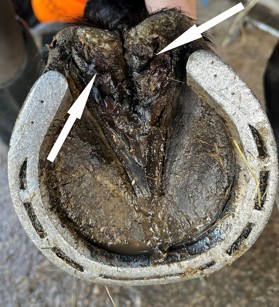
The arrows on the photograph show areas where the frog has started to become loose, creating crevices which bacteria harbour and cause thrush.
Treatment for thrush
If left untreated, a thrush infection can progress and affect the deeper structures within the hoof. Trush can usually be treated successfully with prompt care. It usually takes two to three weeks to clear up but may take longer for more serious cases1. Your farrier can advise you on the best action to take, though in more severe cases you might need to contact your vet.
A general treatment plan may include:
- Moving your horse to a clean, dry area and using absorbent bedding like shavings or wood chips.
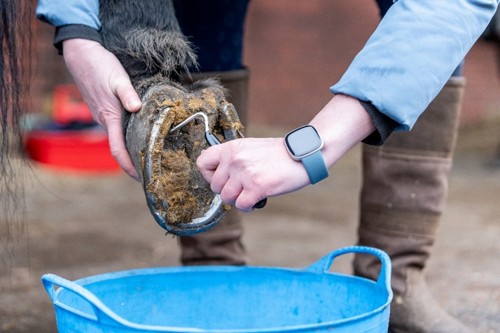
- Cleaning the hoof daily (ideally twice a day) by picking it out and scrubbing the frog and sole with a stiff brush and an antibacterial solution such as correctly diluted iodine or chlorhexidine1. Avoid using highly acidic solutions as they may kill off healthy tissue as well as the thrush.
- Asking your farrier to trim away any loose or diseased frog tissue so air can reach the infection. Your farrier may recommend shoeing if there’s heel instability, foot imbalance or to improve air flow under the foot.
- Avoiding treatments that coat or seal the sole as they prevent air contact. However, if there’s deep crevices, your vet may suggest packing the area with medicated gauze.
- In severe cases, your vet might recommend a tetanus injection2.
When to call your vet
chevron-down
chevron-up
If thrush doesn’t respond to treatment, your horse is lame or if the frog tissue is bleeding, it’s a good idea to call your vet. Seek help if you notice swelling in the lower limb.
Remember: Thrush is common, but with good hoof care and a clean environment, you’ll keep your horse’s feet healthy and comfortable.
Thrush prevention
Preventing thrush is much easier than treating it.
- Pick out your horse’s hooves daily (ideally twice a day) and make sure they have somewhere dry to stand for part of the day
- Improve drainage in muddy areas by adding gravel or hardcore
- Keep bedding clean and dry by mucking out regularly
- Book regular farrier visits, usually every four to six weeks or as advised, to keep hooves balanced and frogs healthy
- Exercise on a clean, dry surface helps the hoof’s natural cleaning process
- Feed a balanced diet with nutrients like biotin for strong hooves.
Get in touch –we’re here to help
Our Horse Care and Welfare team are here to help and can offer you further advice with any questions you may have. Contact us on 02476 840517* or email welfare@bhs.org.uk. You can also get in touch with us via our social media channels.
Opening times are 8.35am–5pm from Monday — Thursday and 8.35am–3pm on Friday.
*Calls may be recorded for monitoring purposes.