


Signs and symptoms
Look out for visible wounds such as cuts, scrapes or skin flaps shaped like a ‘U’ or ‘V’ on the heel bulbs.
Your horse may show lameness, which can range from a slight dip in performance to severe difficulty moving, depending on the injury.
Other signs include heat, swelling and pain when you touch the area. Bleeding or discharge may also occur, especially if infection sets in.
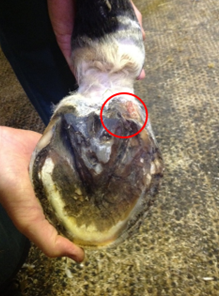
The highlighted area shows a hoof with an infected heel bulb.
Credit: British Farrier & Blacksmith Association
Causes
These injuries often happen when a hind hoof strikes the front heel (known as overreaching). This can be due to poor coordination, fatigue or fast movement. Horses with long hind legs and short backs are more likely to overreach1.
Poor hoof care, such as overgrown hooves or incorrect shoeing, can slow the front foot’s breakover (the moment a horse’s heel lifts and the hoof rolls off the toe), making injuries more likely1. Environmental hazards like muddy ground, sharp rocks/stones or wire fencing can also cause trauma to the heel bulbs.
Treatment
Start by cleaning the wound with cool water or saline to remove any dirt. Apply firm pressure with clean gauze to stop bleeding, then use an antiseptic ointment. Cover the area with a sterile bandage or protective boot to keep it clean.
For deeper wounds, call your vet immediately. They may need to debride and stitch the wound, prescribe antibiotics to help healing and prevent proud flesh2.
Prevention
To prevent these injuries, use well-fitted bell (overreach) boots during exercise and turnout if your horse is prone to injury. Work with your farrier to keep hooves trimmed and balanced, and consider shoeing options that help quicken the front foot’s breakover if required.
Pick out your horse’s hooves at least once a day so you can check the bulb area, clear away any mud and spot problems early. After exercise, take a moment to check your horse’s legs and hooves for signs of trouble. Also, keep their environment free from sharp objects and avoid riding in deep mud when they’re tired. Building fitness gradually is another great way to reduce the risk of missteps caused by fatigue.
References
- Wound Or Laceration From Overreach Injury | Horse Side Vet Guide
- Sloan, P. B., et al (2022). Equine heel bulb lacerations: 62 cases (2004–2018).
Get in touch - we're here to help
Our Horse Care and Welfare team are here to help and can offer you further advice with any questions you may have. Contact us on 02476 840517* or email welfare@bhs.org.uk. You can also get in touch with us via our social media channels.
Opening times are 8.35am–5pm from Monday–Thursday and 8.35am–3pm on Friday.
*Calls may be recorded for monitoring purposes.