


Causes of hoof penetration injuries
There are several ways a horse can get a penetration hoof injury. Often, it happens when they step on something sharp. Nails, screws, thorns, bits of wire, glass or even sharp stones can pierce the sole or wall of the hoof.
What to look for
If your horse suddenly becomes very lame, especially if they seem unable to put weight on one hoof, check for a penetration injury. The degree of lameness shown varies depending on the location, how deep the object is and how long it’s been embedded. They may look ‘hopping’ lame. Sometimes the opposite leg swells because it’s taking all the horse’s weight. If the object has fallen out, you might not see it, so keep an eye out for heat, swelling or signs of infection.
If you’re worried, phone your vet — they may ask you to send them photos.
What to do if your horse has a hoof penetration injury
Although it’ll be your natural instinct, don’t pull the object out. Call your vet immediately and they’ll provide further guidance, depending on the injury. While waiting, if the area is safe, don’t move your horse as this could cause further damage - keep them as calm and still as possible.
If your vet advises you to remove the object, ideally take photos first, mark how deep it went and keep the object for your vet.
Diagnosis and treatment
chevron-down
chevron-up
Depending on the location, your vet will usually take X-rays or scans to check the depth and which structures are affected.
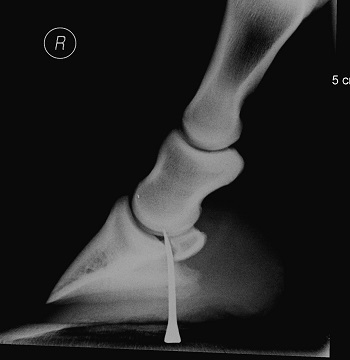
Penetration injury caused by a nail through the sole of the hoof.
Photo Credit: Neil Townsend MSc BVSc MRCVS, Three Counties Equine Hospital
If the injury is shallow, treatment might involve trimming away damaged tissue, flushing the wound with antiseptic, applying a poultice and bandaging.
Deep injuries, especially those involving joints or the navicular bursa, often need surgery to clean and flush the area2. Antibiotics are important to fight infection, and pain relief will help keep your horse comfortable.
A tetanus booster is essential if vaccinations aren’t up to date1. Sometimes, special shoes called hospital plates are used to protect the hoof while allowing daily treatment.
Recovery time will depend on the severity of the injury and can be anywhere from weeks to months.
How to prevent hoof penetration injuries
The best way to prevent penetration injuries is through regular hoof care and a tidy environment: Pick out your horse’s hooves every day to spot problems early
- Keep fields, yards and stables free from nails, screws and sharp debris
- After any repairs or farrier visits, sweep up thoroughly
- Regular pasture checks and good fencing maintenance.
References
- XL Vets Equine. (2019) Penetrating Foot Wounds.
- Scharf, A., & Peroni, J. (2025) Diagnostic imaging and management of penetrating wounds of the foot.
Get in touch - we're here to help
Our Horse Care and Welfare team are here to help and can offer you further advice with any questions you may have. Contact us on 02476 840517* or email welfare@bhs.org.uk — you can also get in touch with us via our social media channels.
Opening times are 8.35am – 5pm from Monday – Thursday and 8.35am – 3pm on Friday.
*Calls may be recorded for monitoring purposes.