


Why hoof health matters
The saying “no foot, no horse” is true. Hooves carry your horse’s entire weight and are built to handle pressure, adapt to terrain and regenerate over time. Without proper care, hooves can become vulnerable to infections and injuries.
For donkey-specific advice, visit The Donkey Sanctuary.
Daily hoof care
The best way to protect your horse’s hooves from injury and disease is through daily hoof care, regular farrier visits and prompt attention to any changes.
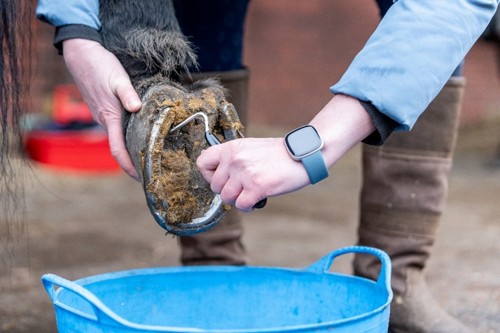
Pick out your horse’s feet at least once a day to check for stones, debris, cracks, splits, thrush, and where applicable, loose or worn shoes. Regular checks allow you to spot early signs of issues. Prompt action can prevent discomfort and more serious problems.
How to pick out your horse's hooves safely
chevron-down
chevron-up
- Tie your horse securely or have someone hold them
- Gently run your hand down their leg to signal your intention (down the back of a front leg and down the front of a hind leg)
- Use a hoof pick from heel to toe, avoiding the frog
- Clean thoroughly, especially around the frog and heels
- Pick into a bucket to keep the area tidy or sweep up afterwards before your horse re-steps into the mess.
Working with a farrier
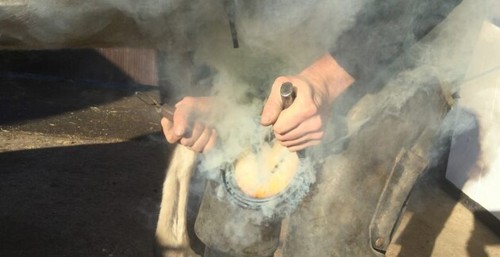
We recommend using a registered farrier for trimming and shoeing. Registered farriers are regulated by the Farriers Registration Council (FRC), to maintain high standards and accountability.
Your farrier will advise on:
- Whether your horse needs shoes or can go barefoot
- The best type of shoe or trim based on your horse’s work, lifestyle and hoof condition
- How often to shoe or trim — usually every four to six weeks for shod horses, and sometimes longer for barefoot horses.
Every horse is different, so your farrier will consider factors including workload, surfaces worked on, clinical history and hoof quality when making recommendations.
If you’re concerned about your horse’s comfort or hoof health, reach out to your farrier. They’ll guide you and if needed, suggest involving your vet. Getting help early gives your horse the best care.
Hoof shape and balance
chevron-down
chevron-up
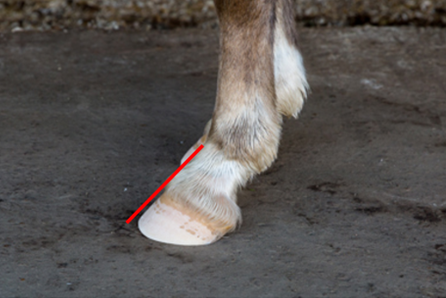
Regular appointments as advised by your farrier will help to keep your horse’s hooves balanced and in good shape. On flat ground, the hoof should slope at about 45 to 50 degrees in the front hooves and 50 to 55 degrees in the hind hooves, to be in line with the pastern (shown by the red line in the image below)1. The hoof wall should be smooth and free from cracks or lines. Horizontal lines across the hoof wall can be signs of past laminitis or poor nutrition.
Poor hoof shape can cause problems like tripping or bruising, but a farrier may be able to help by using remedial shoeing.
Barefoot or shod hooves: what's best for your horse?
Whether using traditional steel shoes, composite alternatives or hoof boots, the priority should always be your horse’s welfare and comfort. Some horses need shoes for support, while others do well without. Talk to your farrier to decide what’s best, considering factors like workload, terrain and hoof health.
Never remove shoes without a plan to keep your horse comfortable. Sometimes shoes are needed for recovery, and some horses do best with a mix (barefoot behind, shod in front). Working with your farrier helps protect long-term hoof health.
Barefoot hooves
chevron-down
chevron-up
Going barefoot allows your horse’s hooves to function naturally without shoes. It’s not suitable for every horse, and success relies on planning, consistent care and understanding individual needs. Be prepared for challenges and have a backup plan if your horse becomes uncomfortable or lame.
Benefits:
- Promotes natural wear and mechanics
- Reduces concussion on hard surfaces
- Avoids nail-related hoof wall damage.
Considerations:
- Some horses may struggle barefoot, especially on rough terrain or with conformational issues
- Transitioning requires time, regular trimming and good management.
Hoof boots and composite shoes
chevron-down
chevron-up
Modern hoof care goes beyond the traditional choice of steel shoes or going barefoot. It now includes innovative options like hoof boots and composite shoes, designed to support hoof health, comfort and performance.
Hoof boots:
- Hoof boots are useful for transitioning horses from shod to barefoot
- Can be used for turnout and riding
- Increasingly applied in remedial cases to support recovery.
Composite shoes:
- Lightweight and flexible, mimicking barefoot movement
- Can be glued or nailed
- A good alternative when hoof boots aren’t suitable
- Often chosen for horses needing extra support without the rigidity of steel shoes
- Can help horses cope with conformation challenges or environmental conditions while protecting the hoof and allowing normal growth.
Shoeing for support
chevron-down
chevron-up
Shoes remain a valuable tool, especially for horses in regular work or with specific needs.
Types of shoes:
- Steel: durable and ideal for heavy work
- Composite: flexible and lightweight
- Handmade: customised for individual conformation and/or hoof health.
Farrier techniques:
- Set toes, rolled toes and rocker shoes help support correct loading and balance
- Remedial shoeing may be used for specific conditions, though not all horses with issues require specialist shoes
Environment and weather
Hoof moisture changes with the seasons. Dry weather can make hooves brittle, increasing the risk of cracks and splits2. Wet conditions can soften hooves, making them more prone to infections like thrush.
Tips for healthy hooves:
- Use hoof dressings in dry weather to help maintain moisture — ask your farrier for advice
- Always provide a clean, dry place for your horse to stand, such as hardstanding in fields or clean bedding in housing/stables.
Hooves are breathable and sensitive to environmental changes, so consistent care is key year-round.
Diet and nutrition
A balanced, high forage diet supports healthy hoof growth. Adding a balancer to your horse’s feed can make sure they get all the essential vitamins and minerals they need. Biotin (vitamin B7) helps strengthen hooves, especially if quality is poor3. Whole-horse health is key to strong hoof growth. If a metabolic problem is suspected, such as Equine Metabolic Syndrome, your farrier may refer to your vet.
Movement and exercise
The hooves help to circulate blood back up the leg, movement boosts this circulation and supports hoof growth. If your horse is housed/stabled, daily turnout and/or regular exercise is essential. Maintaining your horse’s fitness can help to improve their overall health.

Supported by Nigel Brown AWCF on behalf of the British Farriers and Blacksmiths Association.
References
chevron-down
chevron-up
- Kauffmann, S., & Cline, C. (2018) The Essential Hoof Book: the complete modern guide to horse feet-anatomy, care and health, disease diagnosis and treatment.
- Stewart, J. (2013) Understanding the Horses Feet.
- Burns, T. A. (2021) “Feeding the Foot”: Nutritional Influences on Equine Hoof Health.


